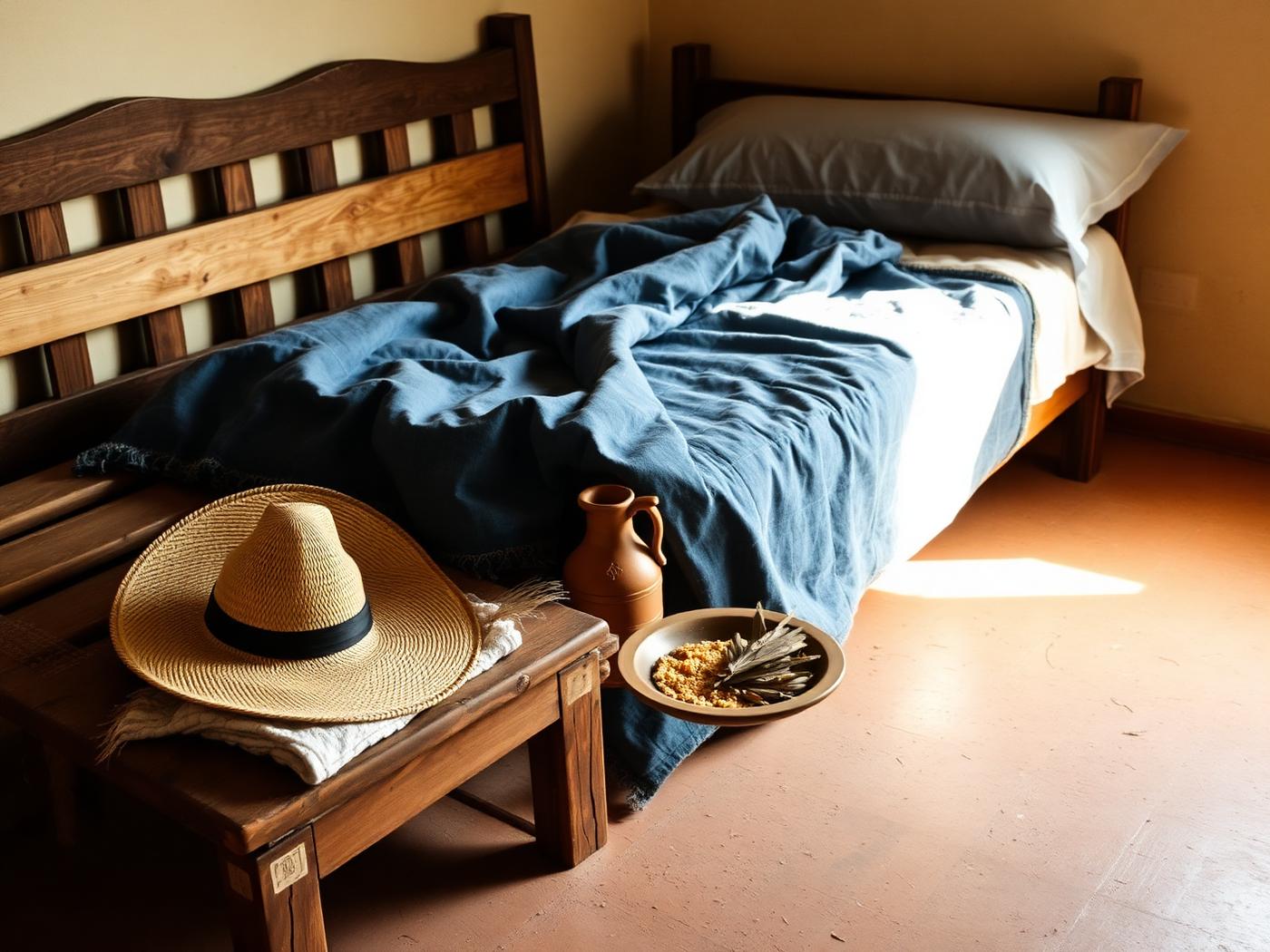
Kouzen Zaka — also called Azaka Mede or Papa Zaka — is the lwa of agriculture, the dignified peasant cousin of the Vodou pantheon. He arrives in a denim work shirt and a wide straw hat, a sisal sack slung over one shoulder, the clay pipe of the countryman between his teeth. He speaks plainly, eats plainly, and refuses to be flattered.
He stands for the sacredness of humble work, for the dignity of those who labor with their bodies, for the slow patient cycle of planting and tending and harvest. He is the patron of farmers, of gardeners, of cooks, of cleaners, of every keeper of small daily tasks. He asks that you not be ashamed of work, of dirt under the nails, of a body tired at the end of a true day. To him there is no higher calling than to feed.
Zaka comes to Haiti from the Taíno — one of the few lwa to carry the memory of the island's first people, the Arawak farmers who tended cassava and corn long before the slave ships. The maroons in the mountains, who survived by growing what the colony refused them, kept his rites alive. To this day his fèt on the first of May is celebrated with cornmeal, dried fish, and the sharing of a single clay pipe. To make a room for him is to honor the unbroken line from those first gardens to the food on your table tonight.